





This is the second post in our series on the NSF I-Corps Teams program. In my first article, I covered the fundamentals: what NSF I-Corps is (a transformative seven-week program designed to help academic researchers translate deep-tech research into real-world impact) and the key eligibility requirements for NYU teams. If you haven't read it yet, you can find Part 1 here: Unlocking Impact: Everything NYU Researchers Need to Know About the NSF I-Corps Program.
This second post dives into the significant changes the NSF has recently made to the program, focusing on the new funding mechanism and updated expectations for participating teams.
Applying to NSF I-Corps: What's the same
The front-end application process for the National I-Corps Teams program remains largely the same. All teams, whether they qualify through an NSF lineage or participation in regional I-Corps program (such as the NYU Tech Venture Workshop), still need submit a concise executive summary through the National I-Corps portal. This is followed by a rigorous internal review by NSF staff and an interview with the NSF before a team is formally admitted to a specific cohort.
🚨 Important Note for NYU Teams: Before you upload anything to the official NSF portal, submit your draft Executive Summary to the NYU Leslie Entrepreneurial Institute team for an internal review. Why? A formal nomination for a Hub Recommendation is required for teams without a prior NSF lineage. By reviewing your draft early, we can ensure your application meets the specific technical and commercial benchmarks the NSF looks for, and then help arrange the recommendation from the Hub, which significantly increasing your chances of a getting an interview. Applicants should also notify their school or unit grants administrator in parallel to ensure institutional awareness and support for the proposal and to confirm eligibility requirements needed for downstream award processing, if funded.
The New Funding Mechanism: From Grant to Sub-award
One of the biggest changes the NSF has made is to the funding mechanism, not the front-end application process. The changes only apply to what happens after you're accepted.
Previously, accepted teams would submit a full I-Corps proposal to the NSF. If awarded, that created a standard NSF grant to the university.
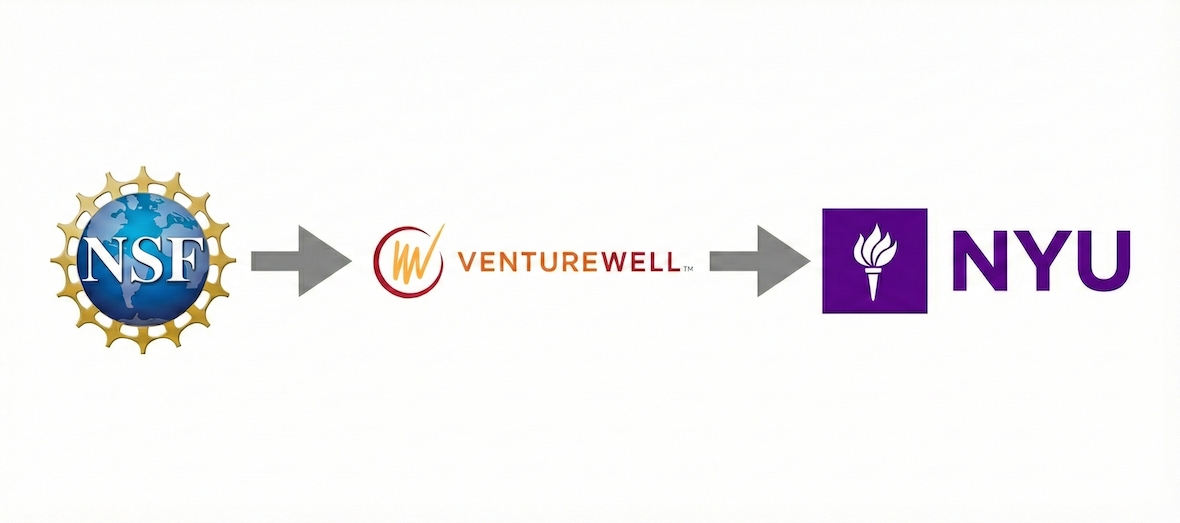
Now, there is no additional NSF proposal. Once the NSF admits a team to a cohort, the funding is arranged as a $50,000 sub-award to the university through a third-party organization, currently VentureWell. The money still flows to the institution, but through this intermediary rather than as a direct NSF grant.
Allocating the $50,000 Sub-award
That $50,000 is intended to cover:
- Stipends for the Entrepreneurial Lead and Technical Lead (up to $15,000 and $10,000 respectively, though teams can choose to allocate less).
- Modest compensation for the Industry Mentor (up to $3,000).
- Travel and other expenses related to customer discovery and participation in the program.
- A $10,000 participation fee that the NSF now charges per team.
- University indirect costs (up to $5,000).
Teams and universities have some flexibility in how they allocate the funds within those broad guidelines. Importantly, I-Corps remains one of the rare federal mechanisms that explicitly encourages travel for customer discovery, though that travel must now be entirely domestic. International trips are no longer allowed with I-Corps funds.
At NYU the PI works with their school or unit grants administrator and NYU’s Office of Sponsored Programs, to process the subaward, including obtaining institutional signatures, finalizing the internal budget, setting up the chartfield and managing expenses and reimbursements consistent with University policy.
Program Structure and Expectations: What’s New
On the program side, the NSF has added a bit more structure around the early days of I-Corps.
Teams now begin with an orientation that lays out roles, expectations, and logistics in more detail, so everyone understands the time commitment and interview requirements up front.
The kickoff has been expanded into a five-day sequence. Three of those days (typically Monday, Wednesday, and Friday) are devoted to instruction and team “report-outs” on what they’re learning. The other two days (Tuesday and Thursday) are deliberately left open for teams to conduct their first set of customer discovery interviews. From there, teams settle into a rhythm of weekly two-hour virtual sessions that combine short lectures, team presentations, and feedback from instructors. Each team also meets regularly with their teaching team during office hours for more tailored advice.
Throughout the program, the expectation is that each team will complete at least 100 customer discovery interviews. The NSF is strict about this: interviews you conduct before the official start of the cohort do not count toward the 100, and all core team members are expected to be engaged in the process (though not necessarily in every interview). Attendance is taken at every session, and excused absences are essentially limited to medical or family emergencies.
From a practical standpoint, teams that are most successful in I-Corps are the ones that treat it as a primary commitment during those seven weeks. That often means arranging for lighter (or no) teaching loads or fewer courses and coordinating within the lab to protect time for travel and interviews.
Next Steps and NYU Support
The changes to the NSF I-Corps program are designed to streamline the funding process and provide more clarity on expectations, allowing teams to focus on customer discovery and accelerate their learning and progress. For NYU teams ready to take the next step, remember to utilize the on-ramp programs and support available to you.
Your roadmap includes:
- Laying the Foundation: Start by engaging with the Tech Venture Workshop to gain foundational training in customer discovery and the Lean LaunchPad methodology. For those without NSF lineage on your invention, completing the Tech Venture Workshop, or other official I-Corps regional course is a mandatory prerequisite to applying to the National program.
- Pre-Application Coaching: Talk with our team at Leslie Institute to review your application and to help secure a letter of recommendation from the Hub, if required for eligibility.
- Check Availability: Review upcoming national cohort dates to assess your team's availability for the intensive seven-week commitment.
- Formal Application: Submit your executive summary through the NSF portal, followed by the required internal review and interview for formal admission to a National Cohort.
- Sub-award & Budget Setup: Once admitted, work with your Principal Investigator (PI) and NYU's Sponsored Programs Office to establish the internal budget for the VentureWell sub-award.
- Ongoing Support: Leverage the continued support from the Leslie Institute’s coaching network to stay on track for the 100-interview requirement and maximize your research’s impact.


