





Brain aneurysms, which affect as many as one in 50 people, occur when a blood vessel wall weakens and bulges, creating the potential for ruptures that can lead to stroke, bleeding and death. Risk assessment for the condition generally relies on burdensome and invasive procedures. Enter CARA Systems, a startup founded by Prithvinath Reddy Garigapuram (Tandon, ’23) and Srushti Katore (Tandon, ’23). The team has built a non-invasive cloud-based software tool aimed at enhancing and streamlining the aneurysm detection process.
“The idea is to reduce decision time and improve the accuracy of early stage triage while moving away from invasive tests and imaging,” says Garigapuram. This approach not only reduces but also eases the health burden that invasive diagnostics impose on the patient. The software automates image processing using non-invasive inputs including ultrasounds, CAT scans and combines patient medical history, to employ predictive modeling and to produce a customized report on risk of rupture, progression and other key diagnostic metrics. “Right now, this is a heavily technical and specialized area that radiologists and neurologists spend many hours on per case,” explains Katore. “We automate that workflow through our platform, creating blood flow simulations that preempts invasive testing and indicates whether testing is, in fact, essential or that they can proceed based on available information. We build this picture with data generated through three key parameters:
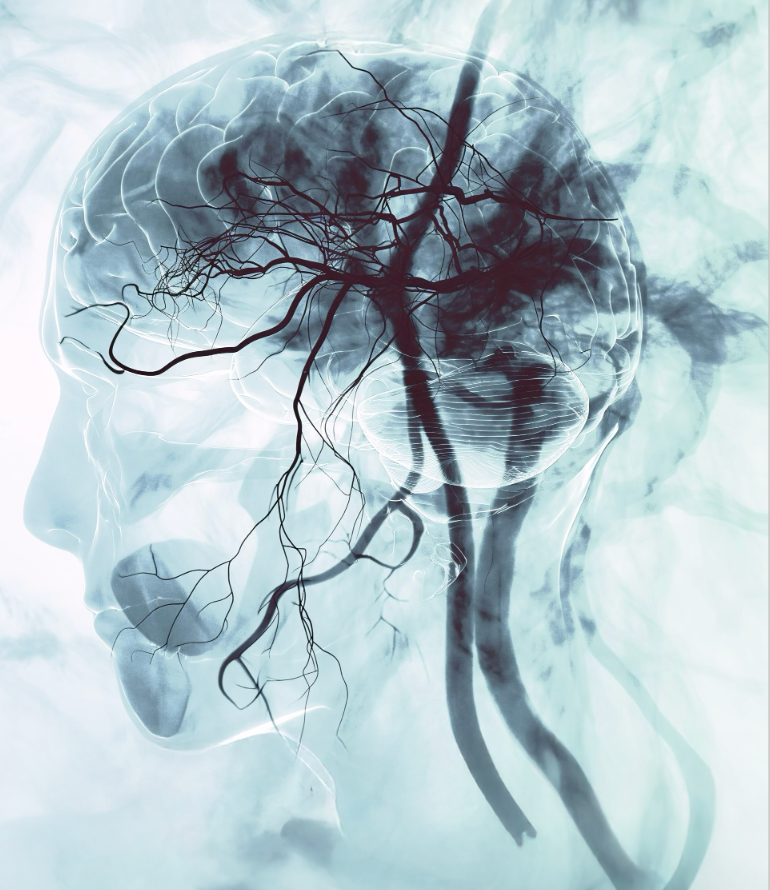
- Morphology: The physical features of the aneurysm and surrounding cerebral vasculature.
- Blood flow hemodynamics: Blood flow dynamics data derived through our simulations.
- Patient's medical history: Specific clinical biomarkers and clinicians remain in the loop to interpret and validate the results.”
The project was born at NYU Tandon where the duo met while pursuing graduate degrees in medical robotics. “Initially, we were studying the formation of aneurysms and predicting their progression,” Garigapuram recalls. “An immediate hurdle was in personalizing patient outlook given the ambiguity of the decision-making process and unique factors associated with each case. So we started looking at ways to provide a personalized approach that fit with our research interests and background. CARA Systems began from there.” Early collaborations at NYU were key. “We had connections to NYU Langone’s Neurology program through our advisor’s network, which is how we connected with our now principal investigator, Dr. Albert Favate,” Katore says. “His strong interest in clinical research and advancing innovative medical technologies has been instrumental to our work, and he has served as our clinical advisor since the company’s inception. We have also received invaluable support from Professor Kurt Becker, former Vice Dean of Research, Innovation and Entrepreneurship at NYU Tandon and a leader in translational commercialization for several decades, who now serves as an advisor and Director of the company.
In June 2023, the team began looking for university resources to help develop their business model. The search led them to the summer 2023 cohort of the Leslie Entrepreneurial Institute’s Tech Venture Workshop (TVW). “We had the tech pretty clear but the problem was iterating this into a business that can thrive,” says Katore. “The Institute team instilled in us early that we had to identify our customers and their exact needs. So TVW was where we understood the importance of doing customer interviews and got our first experience conducting them.” These conversations shaped CARA Systems’ offerings in significant ways. “At first we were focusing on the hemodynamic analysis alone but, in talking to clinicians, we discovered the huge radiology backlogs resulting from the time-consuming nature of these processes. That’s when we started to work in parallel on automating the image processing. Clinicians gave us great feedback and their enthusiasm was so encouraging. That’s when we realized there was a real need for this. After TVW, we had the early skeleton of our business model as we’d identified the keen segment we could sell to.” This hard-won clarity helped outline the safest road forward. “As an early stage company with limited resources, we needed to de-risk our commercialization pathway,” Garigapuram explains. “We started with a big cohort but had to identify which sub-group of customers would help us scale fastest and focus on them. So, after talking to many potential customers, the key takeaway from TVW was settling on our ideal customer profile: - academic institutions and large stroke centers. We had a clear next step of figuring out the right pathways to selling to them.”
That next phase took off for them in the winter 2024 cohort of the NSF’s I-Corps program and participation in the Institute’s Tech Venture Accelerator (TVA). “At NSF I-Corps, we focused on connecting with these hospitals, with payer provider networks and to the FDA,” says Katore. “At TVW, we identified the target cohort. At I-Corps the focus shifted to map the layers of that cohort: Who are the buyers? Who is in the procurement team? Who are our specific users and how do we model patient benefits to them? We did over a hundred interviews and clarified which individual stakeholders connected to which puzzle piece.” Doing so helped further iterate the product. “The rigorous training taught us how to actually talk to different customers based on their profiles,” Garigapuram explains. “Being able to communicate effectively with these stakeholders helped us understand the pain points of these different departments and individuals. We could then reevaluate our product offering and how we solve their problems as we go.”
TVA was all about fleshing out the business plan. “By the end of I-Corps, we had identified the commercialization pathway and steps to scaling,” Garigapuram explains. “TVA gave us the space and skills to test this out by identifying key Key Performance Indicators (KPIs) as they relate to the customer, product validation, legal, and regulatory sides.” The team worked with NYU Langone to complete multiple validation studies and collaborated with Institute team members to connect with regulatory partners. “TVA also really helped with solidifying our rollout strategy and identifying several potential early customers we could work with,” Garigapuram adds. “We finalized a strategy for partnerships down the road. This helped us gain perspective and map scalability of the business for the near future.”
Another benefit of TVA was the access. “We found the mentorship and network that TVA provided invaluable,” says Katore. “Connecting with practicing industry professionals who went through the same journey helped us validate so much of our plan.”
Having run the NYU entrepreneurship gauntlet, the CARA Systems team is on the cusp of commercialization in the pre-pilot phase and their agenda is extensive. “We are reaching out to investors now for our first financing round,” says Garigapuram. “The goal is to scale our platform within the next 18 months, bringing our non-invasive, cost-saving diagnostics to stroke centers across the country and start generating revenue. Beyond that, we’re looking to get FDA clearance for our first commercial product AneuViewTM, build a strong foundation for our scaling plans and expand collaborations with medical institutions.”


