





If you are new to NYU, whether as an undergraduate or a graduate student, and even vaguely curious about startups, you are in the right place and at the right time. NYU has quietly become a serious launchpad for founders across every discipline. It is not just a playground for coders and business majors. It is a university wide sport.
When speaking to students at the Leslie eLab, I like to ask them what schools they’re from for two reasons: to know my audience, and to illustrate that entrepreneurship here is open to all, not just a specific type of student. We work with students from all disciplines; engineers, artists, health professionals, social workers, and those in law, policy, and business—on diverse ventures. You don't need to be a tech person, but you do need to identify a problem and be driven to solve it.
That is what a startup really is about. It is not just an app or a piece of technology. It is a structured attempt to solve a real problem for real people in a way that can scale. Technology might be part of that, but it is not the core. Knowing your customers and their problems are what it's all about.
The Harsh Reality: Most Startups Fail
The uncomfortable truth is that most startups fail. Even among companies that manage to raise venture capital, 75 percent fail to return any money to their investors. When founders themselves explain why, two reasons keep coming up. The first is that they ran out of cash. In New York City, one of the largest venture capital markets in the world, this is usually a symptom rather than a cause. When a startup runs out of money, what it really means is that it could not convince investors to keep funding it. The more interesting question is why.
That leads to the second reason, which is that there was no real market need. More than a third of failed founders say this. It almost never means literally nobody wanted what they built. It usually means not enough people cared enough to buy it, keep using it, or tell other people about it. Think about the app you downloaded a year ago and have not opened since, or the product you bought once and never used or reordered. On paper there was a customer. In reality there was no durable need.
The good news is that this can be addressed much earlier than most people realize. Katerina Fake, the founder of Flickr, once said “So often people are working hard at the wrong thing. Working on the right thing is probably more important than working hard.” That idea sits at the center of how we think about startups at NYU. Before you grind for years building something, you should find out whether anyone truly cares about the problem you are focused on and the way you plan to solve it.
In the Age of AI, Your Edge Is Knowing Your Customer
This has become even more important in the age of artificial intelligence. Today almost anyone can use AI tools to build faster. That means having an idea is not a lasting advantage, and even being fast is not a lasting advantage. Someone with the same idea and better tools can often build more quickly than you can. What they cannot copy as easily is a deep understanding of your customer. If AI is the Formula 1 engine, customer insight is the navigation system. Going faster in the wrong direction only gets you further from your goal sooner.
The “secret,” if there is one, is to build your understanding of your target customer's problems into the foundation of your startup before writing any lines of code, before branding, and before the pitch deck. You can start doing that today with no product, no money, and no team simply by talking to the people you think you want to serve and really listening.
What NYU Actually Offers You
So what does NYU actually offer you to help you build that understanding and turn it into a company? At the Leslie Entrepreneurial Institute and the Leslie eLab, our mission is to give you extracurricular training, mentorship, community and funding to start and scale ventures more effectively, faster. None of us on the core team are professors. We are practitioners. Many of us have spent our careers as founders and investors. Collectively we work with hundreds of startups every year.
Some of the companies that started at NYU might surprise you. OpenAI, Perplexity, and Runway all were co-founded by NYU students. Consumer brands like Brooklinen, Pepper, Sabai and Jones also came out of this ecosystem. There are several other wildly successful NYU startups founded by students that you may not recognize simply because you are not in their target market, such as Rilla and Wrapbook. The point is not to brag about the list. The point is to show that students here really do go on to build meaningful companies, and that they usually started while they were still in school.
The Leslie eLab in Manhattan is your physical hub. You can come in during open hours to work, meet teammates, or attend events. Across the river, the Tandon MakerSpace in Brooklyn gives you 10,000 square feet of fabrication and prototyping capacity, from 3D printers and laser cutters to CNC machines, along with staff who will train you to use them safely even if you have never touched a tool before. Throughout the semester we run a Startup School workshop series open to all NYU students, covering topics like fundraising, immigration 101, customer acquisition and more. You sign up, show up, and take what you need.
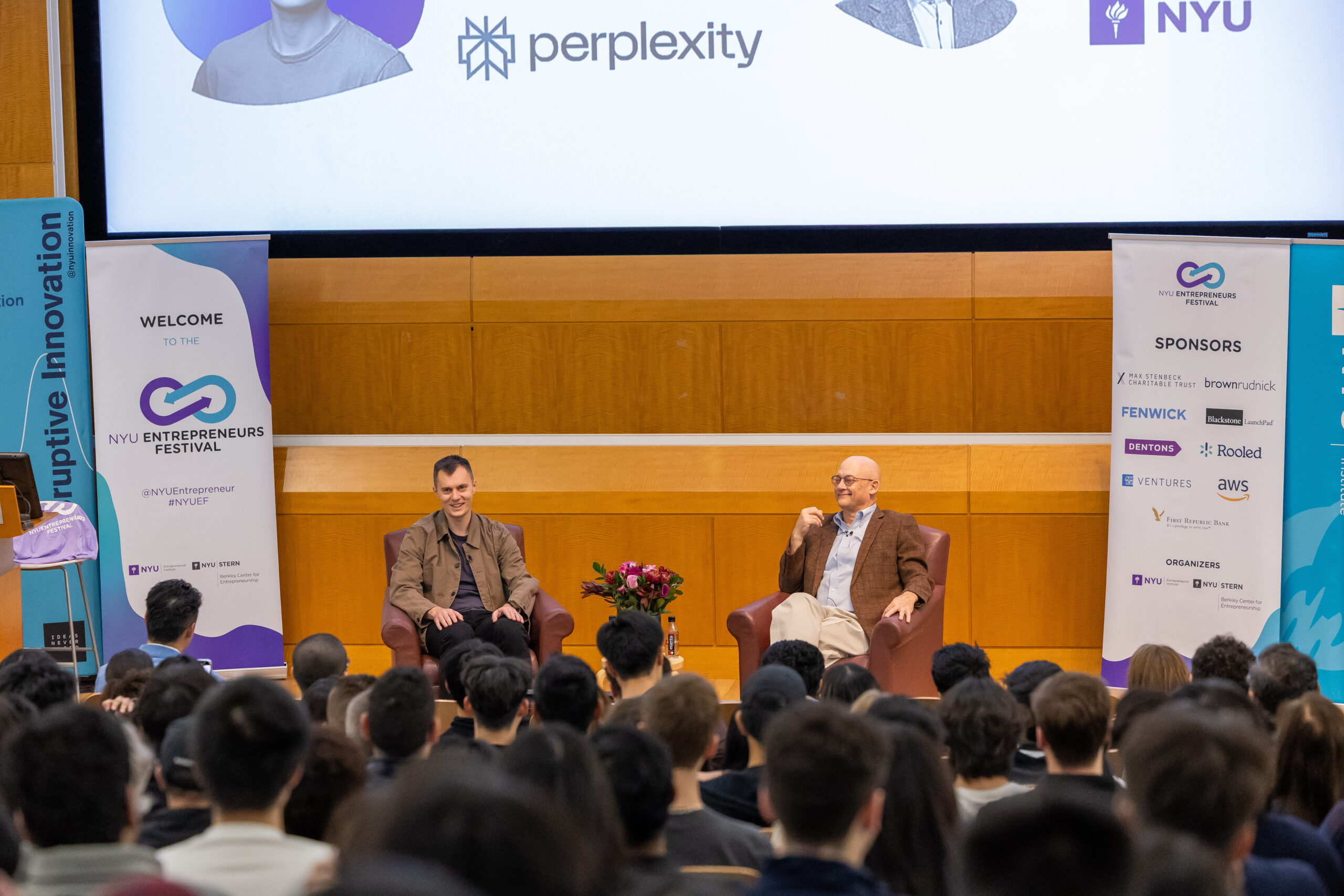
If you are looking for cofounders or collaborators, we host Startup Team Hunts several times a semester. At those events, people with ideas briefly pitch what they are working on and what skills they need on their team. People with skills but no idea introduce themselves and what they are interested in. Then the room turns into a structured matchmaking session. It is a bit like speed dating but for startups. We also maintain a NYU Entrepreneurs Slack where students share opportunities, recruit, and find beta testers, etc. On top of that, we run regular Female Founders lunches and an annual NYU Entrepreneurs Festival and Female Founders Forum to support and showcase founders building companies at NYU that are committed to gender-equity in entrepreneurship.
Coaching at the Center, Not on the Side
Coaching is not a side benefit of the Leslie Institute. It is one of the core things we do. A large proportion of our time is spent in one-on-one meetings with founders, helping them think through opportunities, customer insights, experiments, roadblocks, and major decisions. Across the team we run thousands of these coaching sessions every year. You can come in for coaching at the “I have a half baked idea and a bunch of questions” stage or when you are already running pilots and thinking about hiring and fundraising. The only real requirement is that you are willing to listen, test, and learn. To keep things fair, we ask you to limit yourself to one coaching session a week, but you are welcome to work with different coaches over time when you need fresh perspectives.
Alongside our staff, we also have a group of Founders in Residence, or FIRs. These are NYU alumni who sat in the same seats you are in now, went through our programs, and then went out to build companies of their own. They volunteer their time to come back and work with you because other people did the same for them. Talking to a FIR is a chance to learn from someone who is a few steps ahead of you, who has dealt with many of the same questions you are wrestling with, and who is still in the arena as a founder. Between the core team and the FIRs, you have access to a bench of people who live and breathe startups and who will give you honest, sometimes tough feedback, not cheerleading.
From Idea to Product to Business
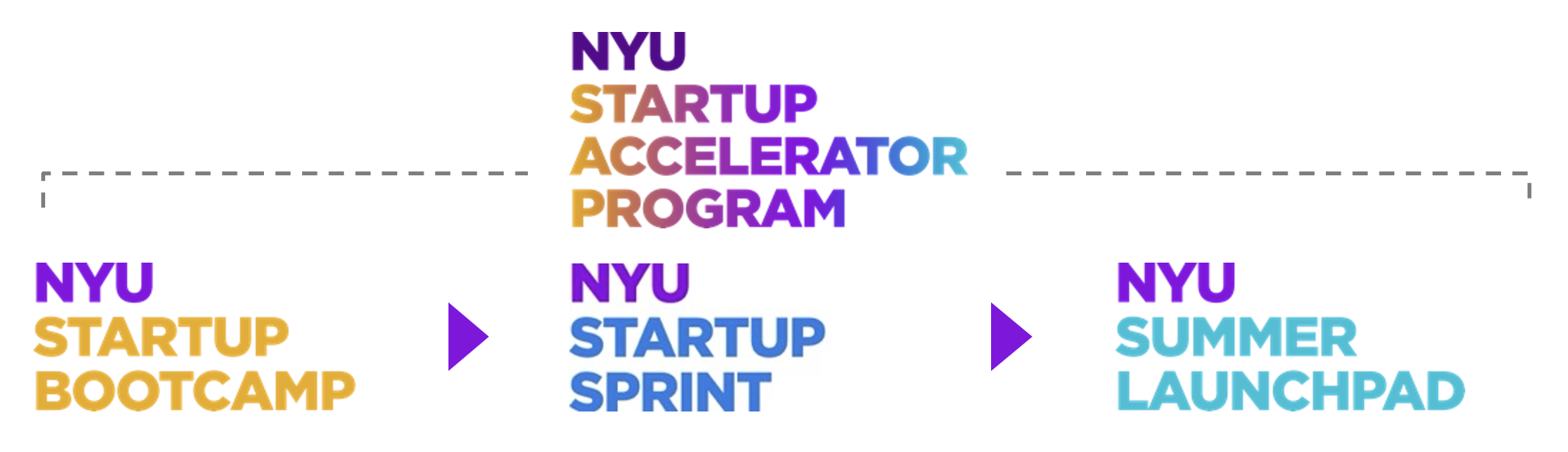
When you are ready to move from curiosity to action, the three part Startup Accelerator Program is often the best starting point. It begins with a short Startup Bootcamp, a half day program plus a mandatory office hour where you learn how to do customer discovery and are pushed to run at least fifteen interviews. The goal is not to polish a pitch deck. It is to find out whether your idea holds water and validate the problem you are actually solving.
If that goes well and you want to go deeper, the two week Startup Sprint gives you an intensive environment to pressure test your assumptions about customers, value, acquisition, and revenue. Teams routinely conduct dozens of interviews in those two weeks and come out with a much clearer sense of what business they are really in. The capstone is the Summer Launchpad, where selected teams receive $15,000 in non-dilutive funding, pro bono legal support, cloud computing credits, and close mentorship from experienced startup founders and investors, while they work full time on their companies over the summer.
Layered on top of these programs is the Leslie Founders community. Once you have gone through Bootcamp and been accepted, you join a year round peer group of the most committed NYU founders. You get extra coaching, a dedicated workspace, a private directory and Slack, and small group sessions with experienced founders and investors.
How to Get Started Right Now
The most important thing to understand is that you do not need to be “ready” in order to start. You do not need a polished product, a fully formed team, or a massive vision. You need a problem you care about and the willingness to talk to people, listen hard, and learn quickly. Use the Leslie eLab as your base. Attend a workshop. Talk to a coach. Apply to a Startup Bootcamp even if you are not sure your idea is good. The biggest mistake new founders at NYU make is not starting too early. It is waiting until it is too late to start at all.


