





Stay up to date on upcoming events, deadlines, news, and more by signing up for our newsletters!
Growing up in Anchorage, Alaska, Zoey Ferguson learned to read the rhythms of nature, from shifting light to the drifting landscape. It taught her to notice when harmony had slipped out of place.
“We’re in danger of creating a world we can’t live in anymore,” Ferguson said.
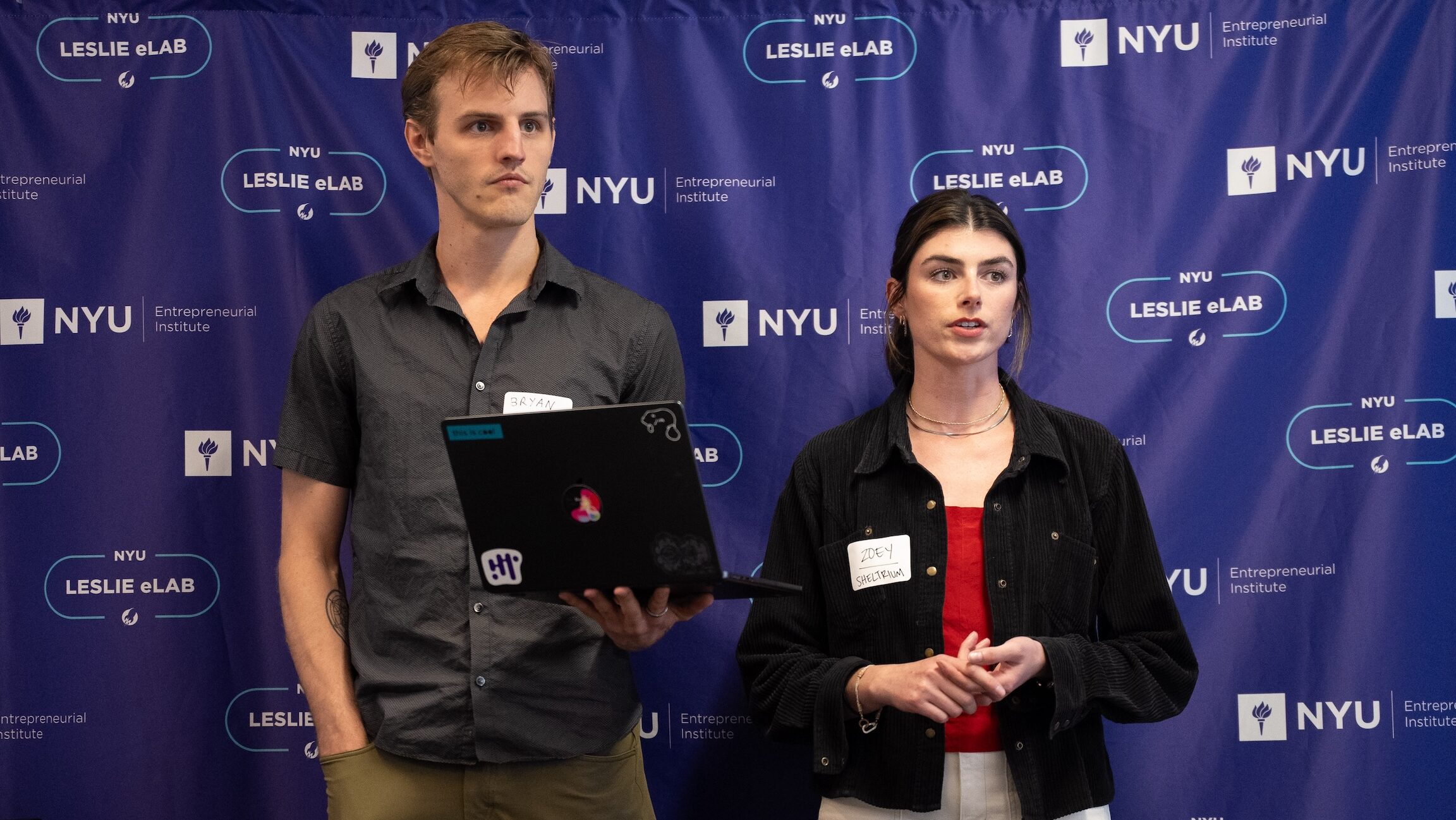
That awareness shapes her work as co-founder and CEO of Sheltrium, a curated resilience marketplace that connects everyday people with clean, modular tools to weather climate disasters. Rather than pushing branded eco-products, the team offers tailored recommendations — solar batteries, backup power, air and water filtration — based on locals’ living conditions.
“We’re trying to address the mismatch between how we react to climate disasters and the technology that could truly make us resilient,” she said.
As a master’s student at NYU Tisch’s ITP program with a background in biology, Ferguson blends science, storytelling and community building into her entrepreneurial path. Her co-founder and CTO, Brian Hellard, is a robotics engineer and disaster shelter designer who approaches resilience as a system, seeing homes as modular, adaptive structures built to withstand stress. Together, they combine technical knowledge with human-centered design, valuing building a business just as much as connecting to who it serves and how.
“I realized communication doesn’t have to mean a scientist teaching someone who isn’t,” Ferguson said. “I’m more interested in listening to the people already living through these changes and bringing them what they actually need.”
This level of care makes finding product-market fit a unique challenge, especially when competitors chase whatever sells fastest.
Fortunately, resilience is something people care about and are willing to act on. Sheltrium’s biggest early success has been validating demand through user surveys and interviews, guided by NYU’s Summer Launchpad program. They found customers were eager to go the extra mile to receive personalized recommendations. Many said they wanted to be the most prepared person in their neighborhood after repeated power outages but didn’t know what alternatives existed beyond traditional gas-powered generators.
The next step in Sheltrium’s journey is going back to local. Ferguson and her team are heading to Houston, where blackouts are common and families are left to fend for themselves. Many own portable generators but suffer from the noise and fumes as they watch the fuel run out.
From there, Sheltrium guides people toward cleaner and more reliable tools through in-person demos and community conversations.
“We’re not saying, ‘Buy our products,’” Ferguson said. “We’re saying, ‘Here’s how to get what you actually need.’ And it doesn’t cost them any different.”


