





With all the ways AI is reshaping how founders build, Julia Austin opened her Summer Launchpad workshop with a caution: co-founder communication isn't one of them. It's just like a marriage, she told this summer's cohort — the hard conversations between people are still fully human work, and no tool is going to have them for you.
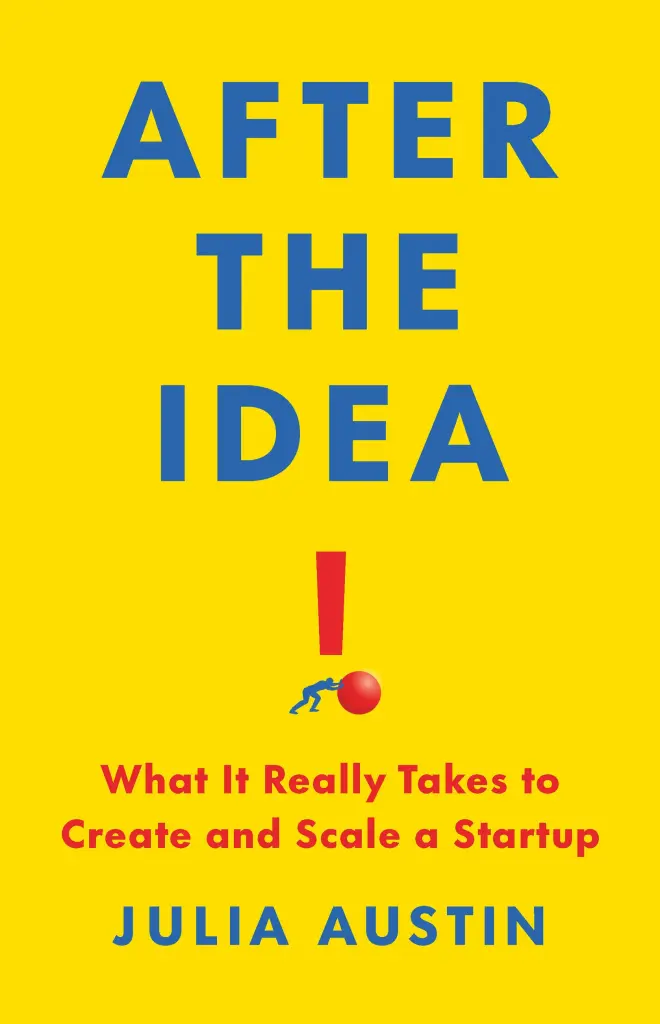
Austin is joining NYU Stern School of Business this fall as a Clinical Professor of Management & Organizations, following a decade teaching entrepreneurship at Harvard Business School. The author of After the Idea: What It Really Takes to Create and Scale a Startup, she has coached founders and operated inside startups for three decades. Her core message to the teams: a venture rarely dies because of the product. It stalls because when co-founders avoid having the hard conversations and persist with bad communication, this contributes to the factors that lead to a venture's failure.
The "organizational debt" that piles up in silence
Austin shared a story about a former student, a few years into his venture, who realized how much "organizational debt" he'd accumulated by dodging hard conversations with his co-founder — friction that eventually cost the team months of cleanup, even with the product doing well. Unspoken tension, she noted, compounds like interest.
Where co-founders actually clash
Most conflict traces back to a handful of areas worth talking through early:
- Money and equity — not just the split, but the psychology behind it. Two founders can have complementary skills and wildly different relationships to risk, spending, and salary, shaped by how they grew up.
- Power and roles — who gets to decide what, and how titles read to investors, employees, and customers. Her warning: don't hand someone a co-founder title just to get them to join your startup or add credibility. You're marrying them, not hiring them.
- Vision and priorities — a two-year "build it and sell it" founder and a ten-year "take it all the way" founder can look aligned for a long time before it surfaces that they never were.
- Identity, ego, and recognition — friction that flares when one co-founder feels overlooked, or when investors start deferring to one partner over the other.
- Work ethic and process — mismatched schedules, unspoken expectations, and the absence of a regular check-in that isn't about the day's to-do list.
"Paint done"
Austin's throughline was clarity. When a situation is ambiguous, she explained, our brains can't help filling the gap with a story — usually a worst-case one. Two founders locked in a room for two days will have the whole team quietly assuming the company is failing or being acquired.
Her fix, borrowed from Brene Brown, is to "paint done.” Describe the finished result in enough detail that no one has to guess. Her example: she once asked a teammate to find an image of a particular bird on a branch for a pitch deck. She had one exact picture in her head, but because she never described it, what came back matched her words (a cartoon drawing) and missed what she actually wanted (a realistic photograph). The same gap opens up with financials, product specs, and feedback — the request sounds clear, but "done" was only ever fully defined in one person's head.


And being direct is a kindness, not a cruelty. Borrowing Brené Brown's line — clear is kind, unclear is unkind — Austin made the case that vulnerability is itself a strategy. A founder who can say "I don't know, let me get back to you" gives everyone else on the team permission to do the same.
Three things to take back to your co-founder
- Sign the "prenup." Put a founder agreement in place, including dissolution terms, while everyone is still happy and it's easy to talk about.
- Have the hard conversations early. Money, risk tolerance, and what success actually looks like. Have these same conversations with your personal partners, too. They signed up for this ride as well.
- Build a cadence. Not the daily standup — a recurring, protected conversation about how you're working together, before the friction shows up.
Austin closed with a set of live scenarios — negotiating equity with a joining co-founder, confronting a co-founder who's checked out, and handling an investor pushing their preferred hire. Each came back to the same move: disambiguate the situation, align on the objective, and decide together.


