





Here's what I took away from a Friday afternoon on the 10th floor of Kimmel: nobody in that room needed to be convinced to care. Hundreds of students, alumni, and founders came together for the 15th Annual NYU Entrepreneurs Festival, and from the keynote to the student panel to Demo Day, the same thread ran through everything. To start something, you need passion, and there is no shortage of it at NYU or in New York City.
Full circle on the keynote stage
Our keynote was a reunion. Avante Price (Stern), founder of Posh, sat down with Mir Hwang (CAS ‘19), founder of GigFinesse, and the two went back a long way. They came up around the same time, and Mir described them as “2 young hungry founders who believed that the live events industry deserved better technology.”
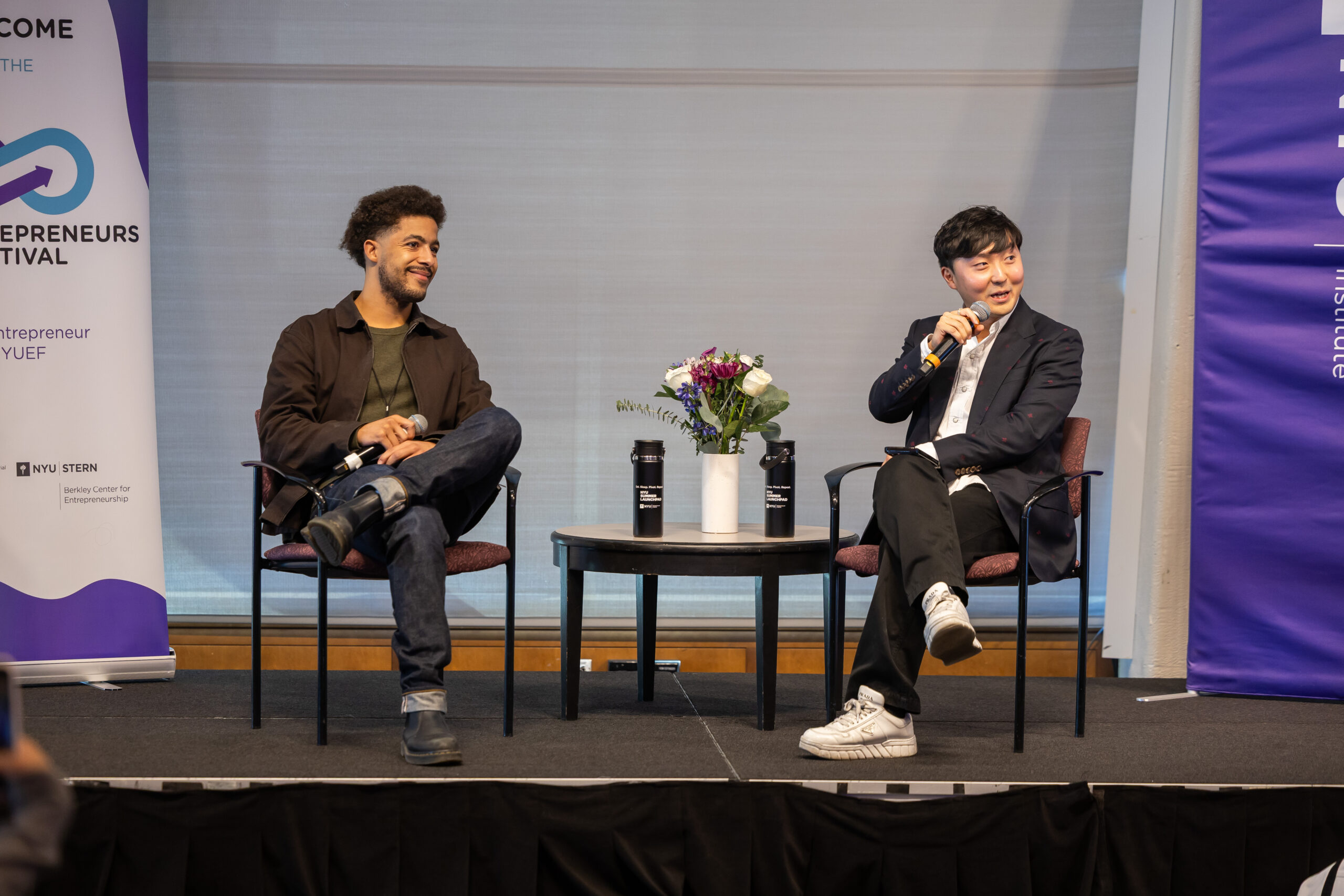
Both have since built something big. Avante started in high school running an odd-jobs business, and Posh grew from the parties he threw and DJed at NYU. Today it has over 10 million users and 50,000 organizers, and it recently raised $37 million. Its biggest event so far drew 40,000 people. Mir is a drummer turned founder. GigFinesse connects artists and venues for live shows, and it now powers tens of thousands of shows a year across more than 70 cities. He has raised $15 million and been named to Forbes 30 Under 30. Different companies, but both started from a love of live music and bringing people together.
Start with the problem you can't stop thinking about
Avante's advice wasn't about scale. It was about starting with a problem you personally understand and care about, and wanting to work harder on it than anyone else. If you just want to be a founder because you like the idea of being on a stage, he said, that's not enough.
On picking an idea, his answer was: "don't worry about the billion-dollar idea. Worry about how passionate you are about the idea you're working on." Most people, he added, are pretty apathetic, so passion is a real edge.
He and Mir also agreed that passion has to show up in the day-to-day. Mir put it this way: "you can build the best technology in the world, but live events ultimately is a people business." For the first couple of years, Avante scanned tickets at the door himself, sometimes until 4 a.m., just to hear from the people using the product.
Our student founders have it too
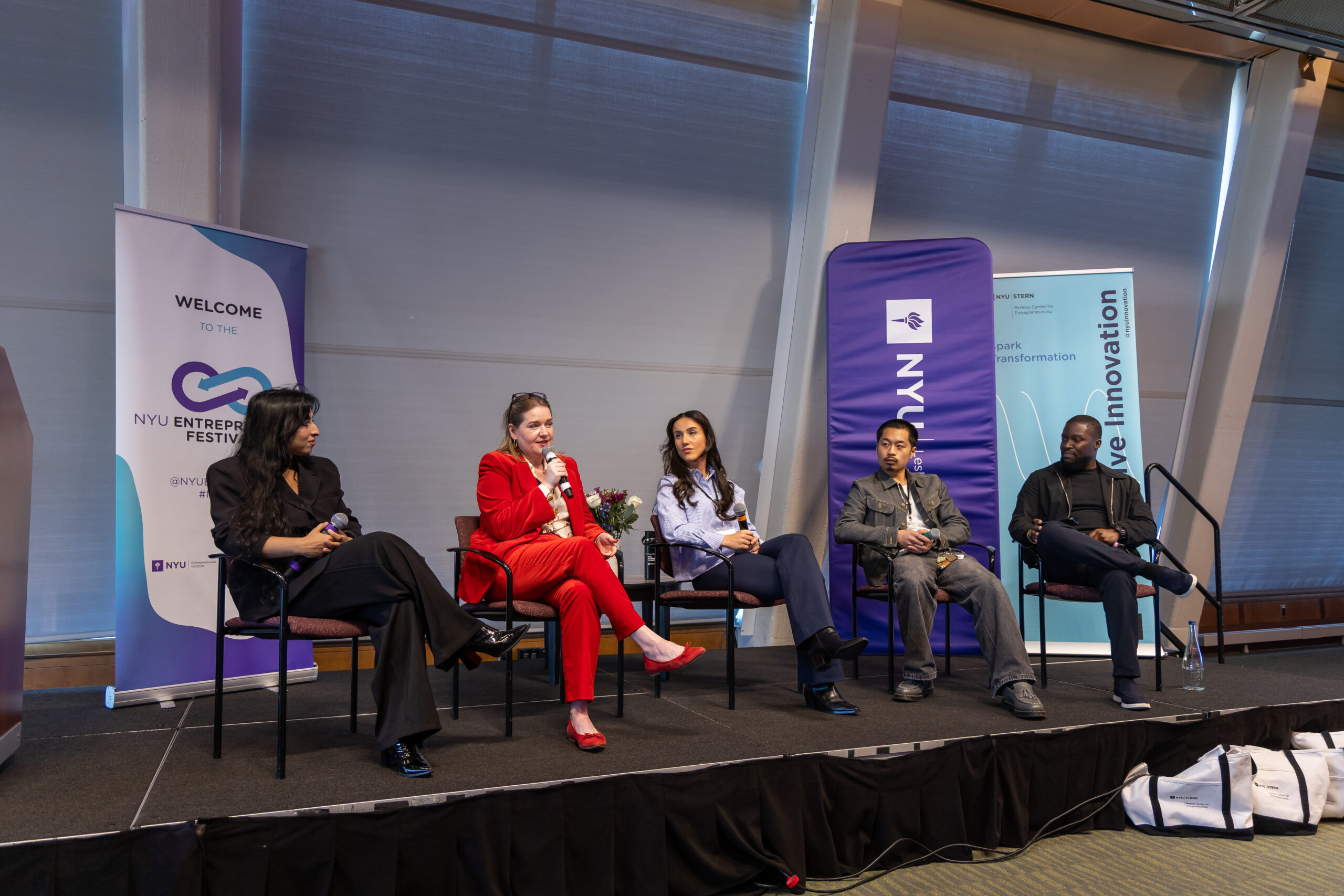
The “Starting a Startup While in School” panel brought together Bakhtawer Baloch (SPS ‘26) of Clairdoc, Corinne Camay (Stern ‘27) of Diagrm, Christian Herren (Courant/Stern ‘26) of Agora, and Lara Pinar (Tandon ‘27) of Jointly Medical, moderated by Nyamitse-Calvin Mahinda (Tandon ‘23) of Vital Audio. Each of them got here a different way. One walked away from a stable CPA job. One was tired of building a product without a seat at the decision-making table. One is a PhD student taking a medical device out of the lab. One is building for a reseller community that is underserved and undervalued, and that fact clearly fires him up.
Their advice was just as direct. Talk to people before you research the industry on your laptop. Find your co-founder in the rooms where your problem lives, whether that's a study group, a lab, or the first day of class. And don't wait. One panelist said, "I genuinely think that people might tell you, oh, don't start a business in school. It is the best time to start something."
Why here?
Avante called New York the best resource NYU has: at 19, you can be in the same room as someone with decades of experience who wants to help. His advice was to get out of the NYU bubble and “go meet some real adults. You’d be surprised how much they’ll take you seriously.”
The panelists had taken that to heart. Corinne and her co-founder kept showing up to Leslie eLab programming, did a bootcamp, and met VCs who came to speak. Another panelist was turned down at first, kept applying, and came to see the Leslie eLab as the place that “has everything you really need.” Lara, who is from Germany, said that kind of support isn’t something you find everywhere: “you have such big opportunities that you should 1,000% use that and don’t take it as granted.”
You could feel it in the room. When the floor opened, students asked about fundraising, co-founders, balancing school, and what to do when you have too many ideas. Nobody was asking whether they should care. They were asking how to build.
Demo Day: twelve teams, twelve problems worth solving
Then the founders took the stage. Twelve teams pitched, and the panelists you'd just heard from were among them:
- Agora is an agentic tool that automates listing workflows for professional clothing resellers.
- Altrovia helps pharma clinical development teams design studies and avoid costly amendments.
- Binder automates prospect research for commercial insurance brokers.
- Clairdoc is an AI revenue layer that validates claims inside EHR workflows to reduce denials.
- Concordare Trials standardizes clinical trial infrastructure with interoperable systems.
- Cortile is an AI verification layer for vendor security reviews at regional health systems.
- Diagrm analyzes visual system designs to improve engineering teams’ reliability, security, and cost.
- Jointly Medical has a wearable optical imaging system to predict Lupus treatment efficacy earlier.
- MilkShaker is a hands-free wearable massager for breastfeeding mothers.
- Nappr turns unused daytime hotel inventory into short stays for rest.
Behind every one of those pitches is a founder who noticed a problem and couldn't let it go.
And the winners are...
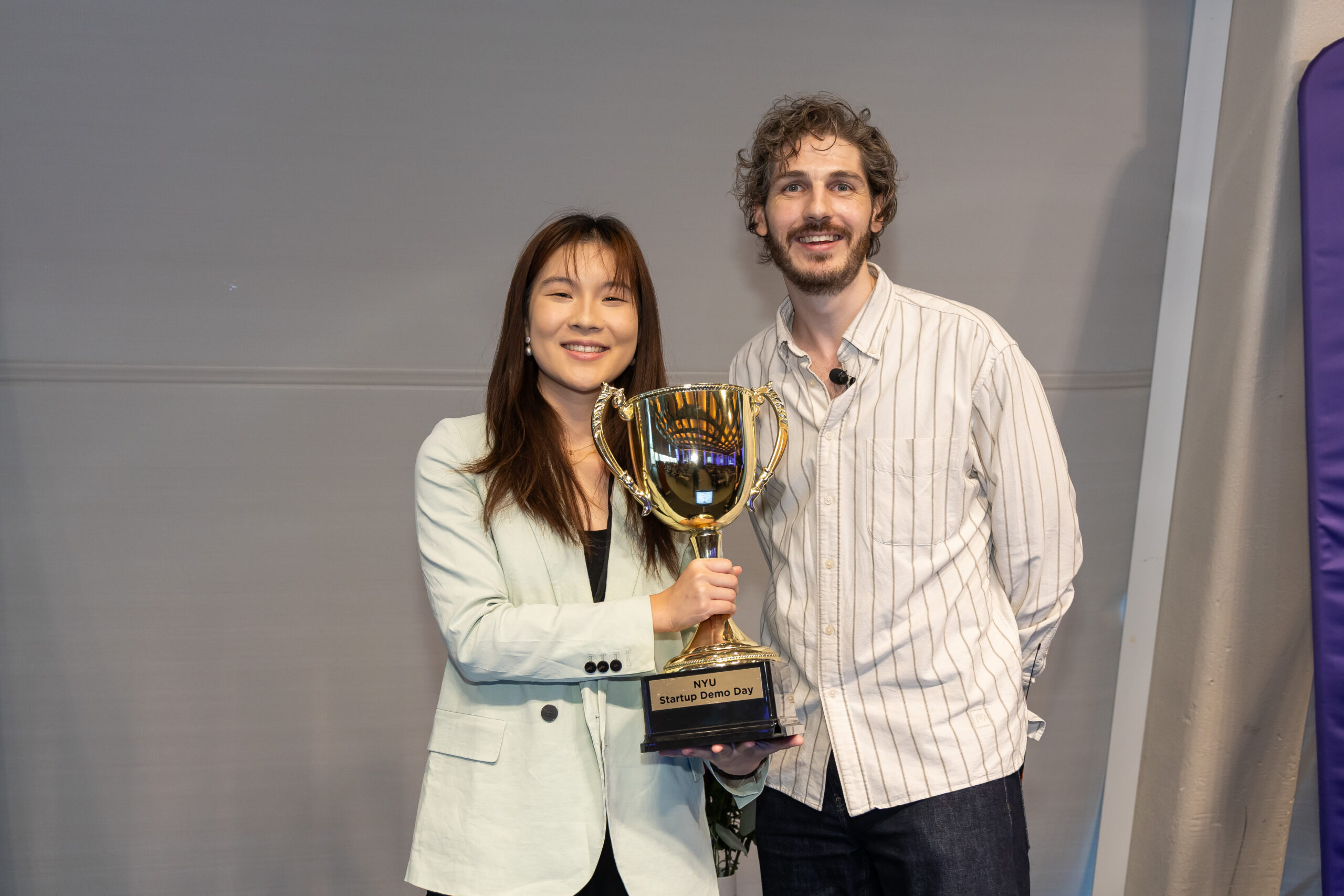
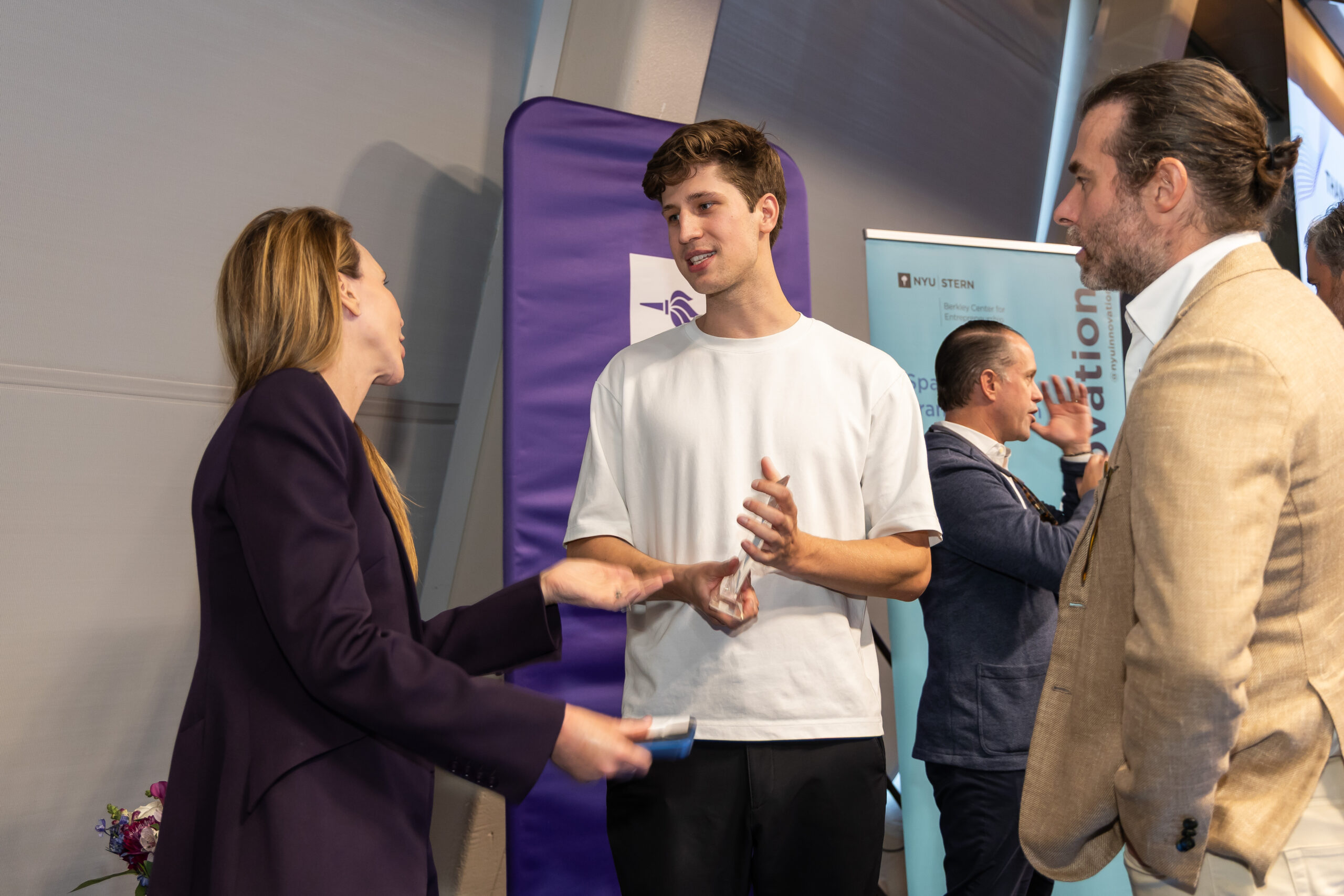
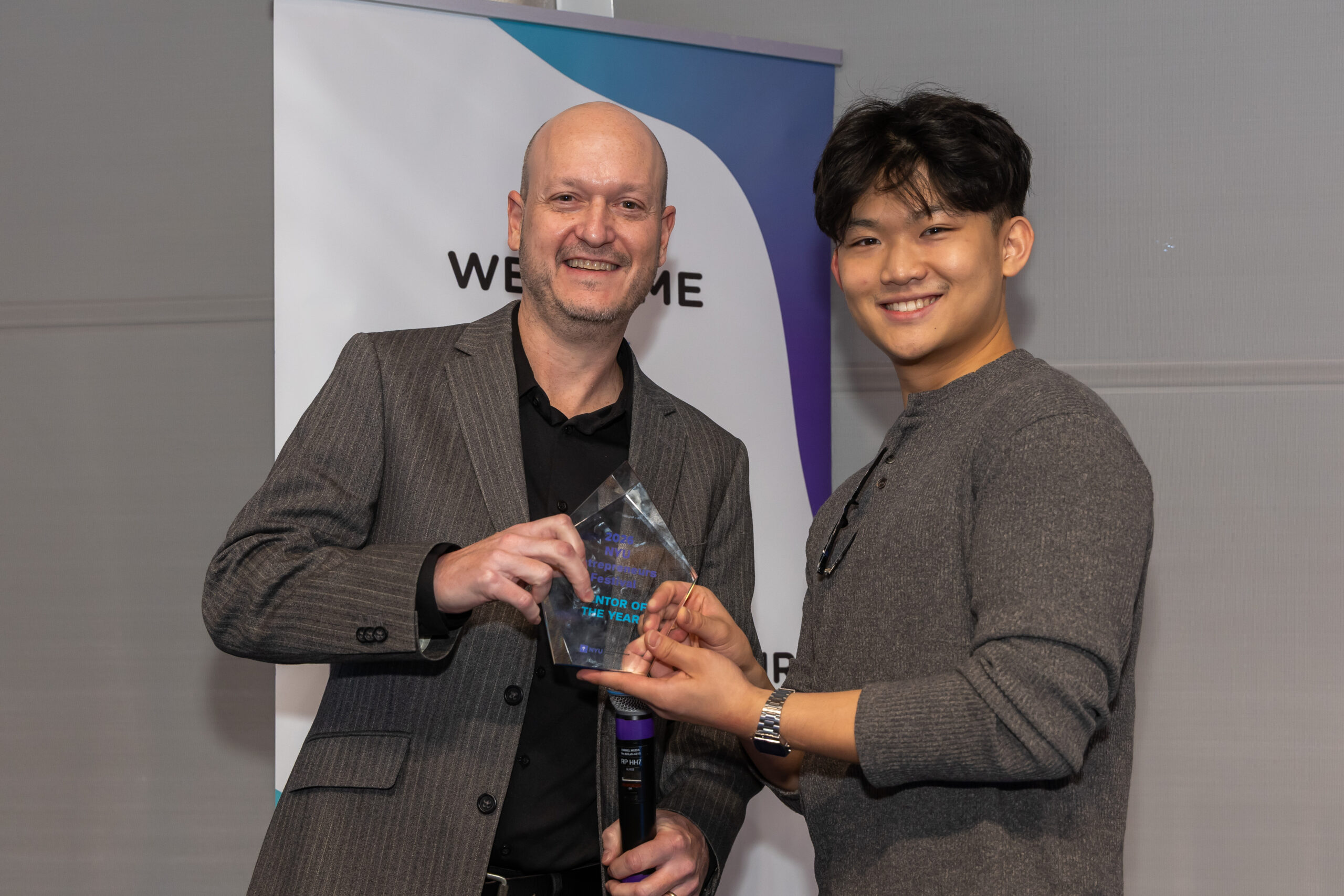
Congratulations to MilkShaker, our Demo Day winner! The team is building for the 90% of moms who deal with painful, recurring breastfeeding challenges. We also celebrated Yannick Bierens (Courant/Stern ‘25) of Binder as the Max Stenbeck Founder of the Year, and Dan Kantor (Tisch ITP ‘05) as our Mentor of the Year, a reminder that this community runs on people who give their time.
Pay it forward
Nyamitse-Calvin closed the panel with a metaphor that I think is fitting to the theme of passion. Think of NYU as a basket: it only has something in it for you if everyone before you put something in. Earlier, he’d asked how many people in the room had talked to the person sitting next to them, and most hadn’t. His challenge was to change that. Meet the founder beside you, share what you learn, and leave something in the basket for the next person.
That’s the other half of passion. It gets you started, and it also makes you want to help the next person who’s starting out.
Your next step
If the festival sparked something, don't wait for the perfect idea. Meet someone new, talk to the people you want to build for, and take the first small step this week.


