





My friends and I first found TALEA Beer Co. in 2021 in Williamsburg. The space was bright enough that I could see the people around me. The music was lively, but not so loud that I couldn’t talk. Female voices crooned over the speakers while light poured through the big windows.
None of these details are dramatic on their own. Together, however, they built an experience that felt fundamentally different from the traditional brewpubs around it.
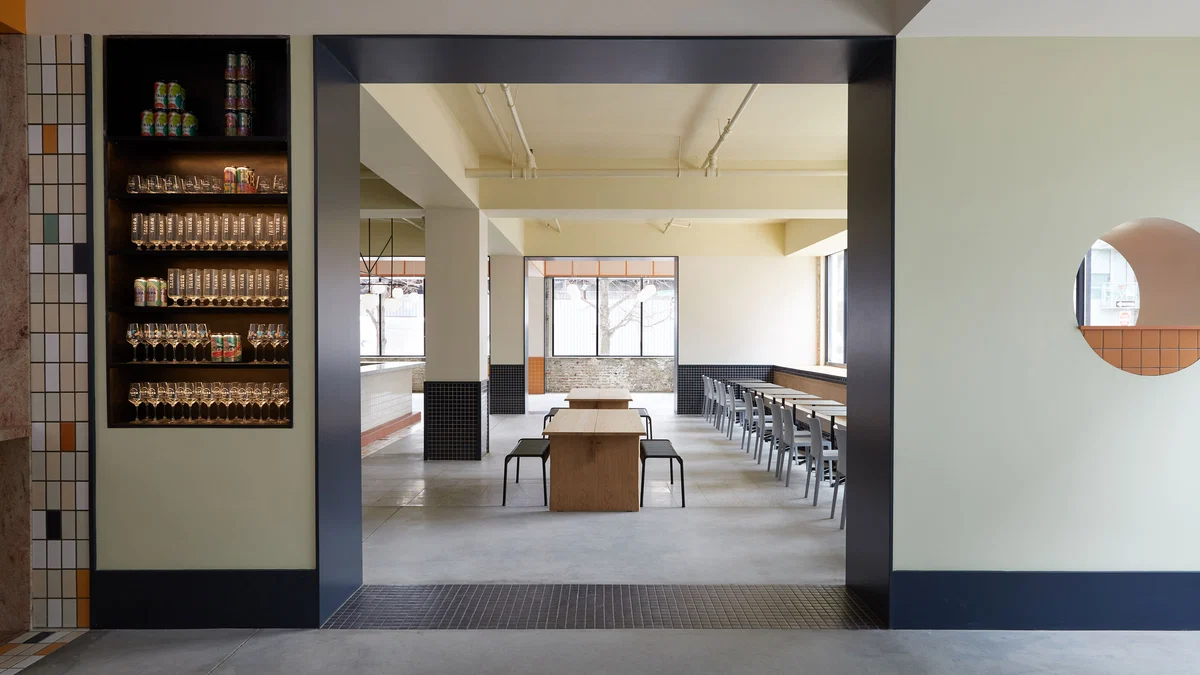
This quiet reassessment of assumptions, about who drinks beer and what they want from the experience, is at the heart of what NYU alumna Tara Hankinson (Stern '15) built with her co-founder, LeAnn Darland.
At a time when Americans are drinking less and the craft-beer industry is contracting, TALEA is rapidly expanding, growing from its first taproom in 2021 to five locations across New York City. It has grown to roughly 85 employees, and projects approximately $11 million in annual revenue.
The company’s growth is a powerful demonstration of what can happen when founders challenge an industry’s conventions and builds intentionally for customers others have historically overlooked.
“Women Don’t Drink Beer”
Tara shared this statement, a sentiment she often heard from investors, at NYU’s Leslie Entrepreneurial Lab’s monthly Female Founder’s Lunch. Her experience suggested a different possibility: perhaps the industry had built its products and spaces around too narrow an idea of who a beer drinker was.
After graduating from NYU’s Stern School of Business, Tara worked at Wölffer Estate Vineyard in the Hamptons, where she saw women enthusiastically embrace the experience surrounding wine. A winery offered more than a drink; it offered hospitality, atmosphere, discovery, and a place to spend time together. By comparison, breweries often felt dark, loud, and designed for a narrowly defined customer.
That contrast revealed the opportunity. Instead of asking how to persuade women to enter spaces created for someone else, Tara and LeAnn questioned: What might a beer company look like if women were treated as core customers from the beginning?
Preparing for Serendipity
After Wölffer, Tara worked in customer-experience strategy, including at The New York Times, while continuing to explore her interest in beer. She spent a year home-brewing, gaining firsthand knowledge of the product and testing whether she wanted to pursue the industry seriously.
Tara credits luck with bringing her and LeAnn together at a Heineken-backed beer e-commerce startup. But by then, she had spent years preparing for that moment in two important ways: moving closer to the people who could help her build a beer company, and becoming someone capable of building one. Tara brought experience in hospitality, customer strategy, marketing, brand, and team culture; LeAnn brought expertise in finance, operations, production, and wholesale.
Together, Tara and LeAnn spent nine months developing recipes and branding, navigating regulatory requirements, and preparing their pitch. They left their jobs in 2019, raised a $1 million friends-and-family round, and signed a lease in Williamsburg. After completing the buildout during the pandemic, they opened their first taproom in March 2021. It remains TALEA’s flagship.
Tara’s path illustrates an important lesson for aspiring founders: you cannot manufacture serendipity, but you can place yourself in the right rooms, build the right skills, and be prepared when it arrives.
From an NYU Network to a Funding Network
Tara and LeAnn recognized early that TALEA was not a traditional venture-backed company. Opening a physical location could cost between $500,000 and $1 million and take 12 to 18 months—far from the rapid, hockey-stick growth most venture firms seek. Instead, they needed friends-and-family funding.

That made the networks Tara had begun building at NYU especially valuable. The founders contacted people by email and LinkedIn, shared a PDF pitch deck, and hosted tastings that allowed potential investors to experience their vision. With a minimum investment of $10,000, supporters could own part of a brewery and brand they wanted to see exist.
TALEA raised its first $1 million through friends and family and has since raised approximately $6 million from around 180 investors—all without giving up majority voting control.
This journey to funding shows that the relationships students form at NYU can eventually become more than a professional network to help you land a job: they can also become the community that helps bring an idea to life.
What NYU Founders Can Learn from Tara’s Journey
For NYU students, Tara’s story offers a few powerful lessons.
Question the premise. When people say a customer group is not interested in a market, ask whether the market has ever genuinely designed for them. “Women don’t drink beer” concealed a much more interesting opportunity: many women wanted a different beer experience.
Build skills before you know exactly how you will use them. Tara’s experience in hospitality, customer strategy, branding, and home-brewing did not initially look like a straight path. Together, those experiences made her uniquely prepared to build TALEA.
Put yourself where luck can find you. Tara could not have predicted that she would meet her co-founder at a beer e-commerce startup. But by moving closer to the industry, she increased the odds of meeting the right person—and had enough knowledge to recognize the fit when she did.
Treat your NYU community as relationships, not contacts. The classmates, professors, alumni, and collaborators you meet today may eventually become advisers, customers, connectors, investors, or co-founders. The value of a network comes from trust built over time, not from reaching out only when you need something. Build these relationships early and nurture them often.
Choose capital that fits the company you are building. TALEA explored venture capital but did not force its business into a model that did not fit. Tara and LeAnn used feedback from those conversations, understood their economics, and found investors whose expectations were more aligned with their path.
There is luck in nearly every founder’s story. The lesson from Tara is not that founders can control it. It is that they can prepare for it.
Learn widely. Move closer to the problems that interest you. Invest in relationships before you need them. Then, when the right insight, person, or opportunity appears, you will have the tools—and the network—to do something with it.


